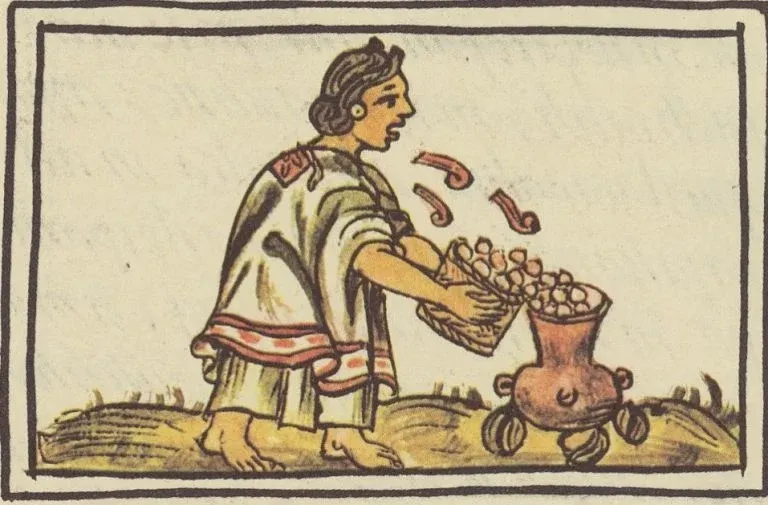
Pozole's name comes from the Nahuatl word pozolli, meaning foamy or frothy, a reference to how the corn looks as it cooks down into hominy. The dish itself predates the Spanish arrival in Mexico by centuries, eaten across Mesoamerica under Aztec rule as early as the 1300s. Corn wasn't just food to the Aztecs, it was sacred, tied directly to their origin stories, and pozole was reserved for ceremonial occasions rather than eaten as an everyday meal.
In this family, it starts with big cuts of pork, browned first, then simmered low until tender enough to pull apart by hand. That broth is what the hominy simmers in, the same order Jorge learned making it alongside his mother. Simple ingredients, done in the right order, is most of what makes it taste like a family recipe instead of a restaurant dish. Over the generations, cooks across Mexico's regions built their own variations on that same hominy base, and today those variations have settled into three recognized styles: White, Red, and Green.
White (Blanco)
The base recipe, hominy and broth, built for everyone to finish their own way at the table. This is the style Jorge's family has made for generations, from Mexico City.
Red (Rojo)
Made with guajillo chiles. Carries 50% of the daily value of Vitamin A across all three proteins. The red salsa on the side does not carry real heat, that comes from chile flakes, added separately.
Green (Verde)
Made with tomatillos and serrano peppers, the serranos are the actual chile, tomatillos are their own fruit, not a pepper. Meaningfully more Vitamin C than the other two. Unlike the red salsa, the green salsa does carry real heat, from those same serranos.
How MyPozole started
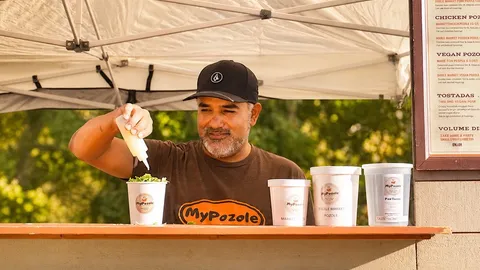
Jorge's family is from Mexico City, and the White Pozole recipe he grew up with had already been passed down for generations by the time he learned to make it himself in college. For years it was just a New Year's tradition, a pot he and his wife made every year for their own party. What changed things was watching his friends' reactions. Most of them were tasting pozole for the first time in their lives, and they loved it enough that they stopped calling it anything but "Jorge's Pozole." The name stuck, and eventually it became the business.
Getting there wasn't a straight line. Jorge had already lived through one business closing when the 2008 financial crisis took down the mortgage company he worked for. Years later, he built a children's transportation service for busy families, and COVID-19 shut that one down overnight too. Pozole is the one that stayed, built on a recipe that was never really his alone to begin with, and on the fact that most people in the U.S. have still never had it: pozole shows up on a tiny fraction of restaurant menus nationwide, and startlingly few people have even heard of it. Jorge's father has been a steady hand through all of it, the kind of family support that the recipe itself was already proof of.